01
I Scored Every Health Intervention
Everyone else ranks health advice by whether it works. We rank it by whether it is worth what it asks of you — and that one change reorders the whole list.
Guide
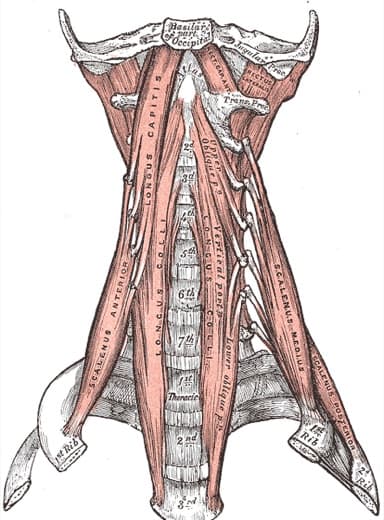
A laptop on a desk puts the screen about a foot below eye line, so you spend the day looking down. Raising it is free and takes a stack of books.
A laptop on a desk puts the screen roughly a foot below eye line, because the screen is welded to the keyboard and the keyboard has to be where your hands are. So you spend the working day looking down at a shallow angle. Raising the screen and separating the keyboard is the entire fix, and it can cost nothing.
Not the middle — the top. Your gaze then rests slightly downward, which is where it naturally sits. A stack of books does this as well as a stand does; the stand is tidier, not more correct.
This is the step people skip, and skipping it makes things worse: a raised laptop puts the keyboard at chest height and your shoulders go up to meet it. Any external keyboard and mouse will do. If you only do one thing on this list, do this pair together or neither.
Forearms roughly parallel to the floor when your hands are on the keys, feet flat. Adjust the chair to the desk first, then put something under your feet if they no longer reach. Most desks are a fixed height and most chairs are not.
The best-set-up posture held for four hours is worse than an average one you leave every half hour. Standing up is the intervention; the furniture just decides how comfortable the sitting is in between.
What this does not do
This is about comfort and staying at a task, not injury prevention — and the distinction matters. Workstation setup reliably changes how a working day feels; the evidence that it prevents lasting damage is far weaker than the internet suggests, and the "text neck destroys your spine" genre is well ahead of what anyone has shown. If you have pain that persists, that is a clinician’s question and not a furniture one.
More like this
Pieces that share a topic, or a product, with this one.
Everyone else ranks health advice by whether it works. We rank it by whether it is worth what it asks of you — and that one change reorders the whole list.
Keep going